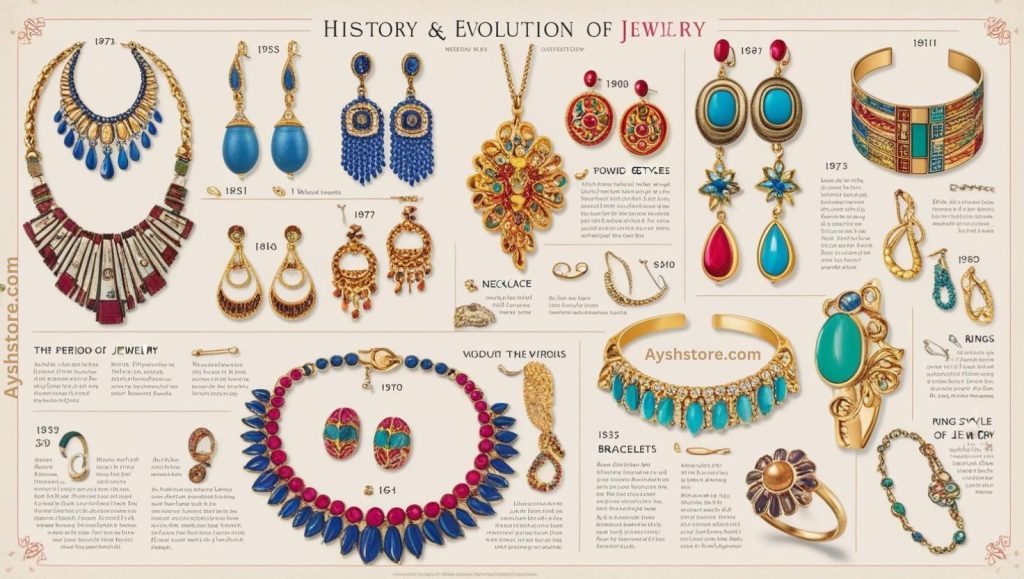
History and Evolution of Jewellery. Jewellery has been an integral part of human culture for millennia, serving not only as a form of adornment but also as a symbol of status, power, and identity. The fascinating journey of jewellery through the ages reflects the technological, cultural, and artistic advancements of various civilizations.
Ancient Beginnings
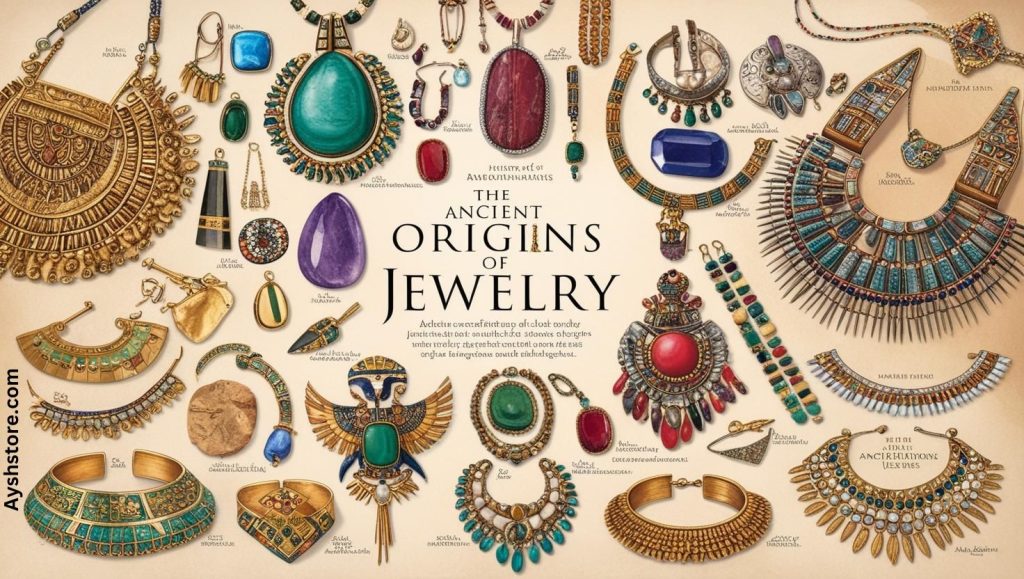
The earliest evidence of jewellery dates back to prehistoric times. Archaeological discoveries reveal that ancient humans crafted ornaments from bones, shells, and stones. These primitive pieces were often used in rituals or as amulets to ward off evil spirits. As early societies began to settle and develop, the art of jewellery-making evolved with the use of metals such as gold and copper.
Egyptian Era
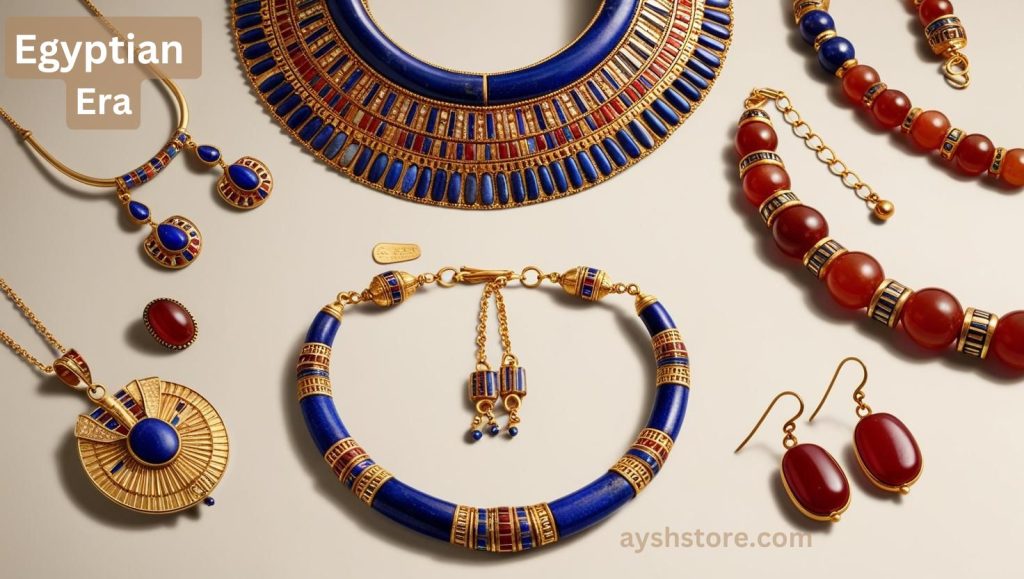
Ancient Egypt stands as one of the most iconic periods in the history of jewellery. Egyptians were master craftsmen who adorned themselves with elaborate pieces made from gold, precious stones, and glass. For instance, the ankh symbolized eternal life, while scarab beetles represented rebirth and protection.
Greek and Roman Influence
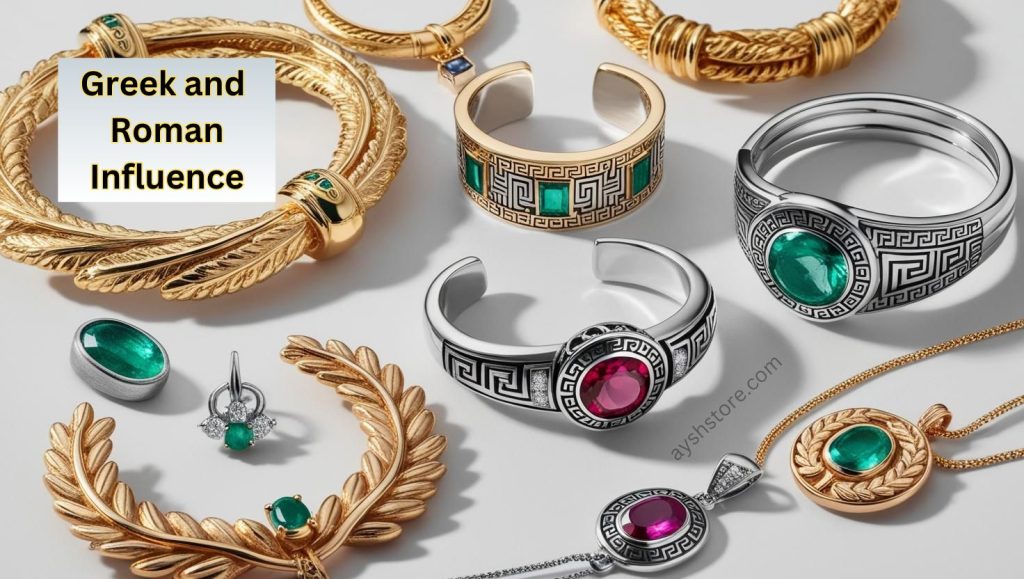
The Greeks and Romans further advanced jewellery-making techniques, introducing intricate designs and the use of gemstones. Greek jewellery often depicted mythological scenes and motifs, while the Romans popularized the use of cameos and intaglios. Jewellery in these cultures was a marker of social status and a means of displaying wealth.
Medieval and Renaissance Periods
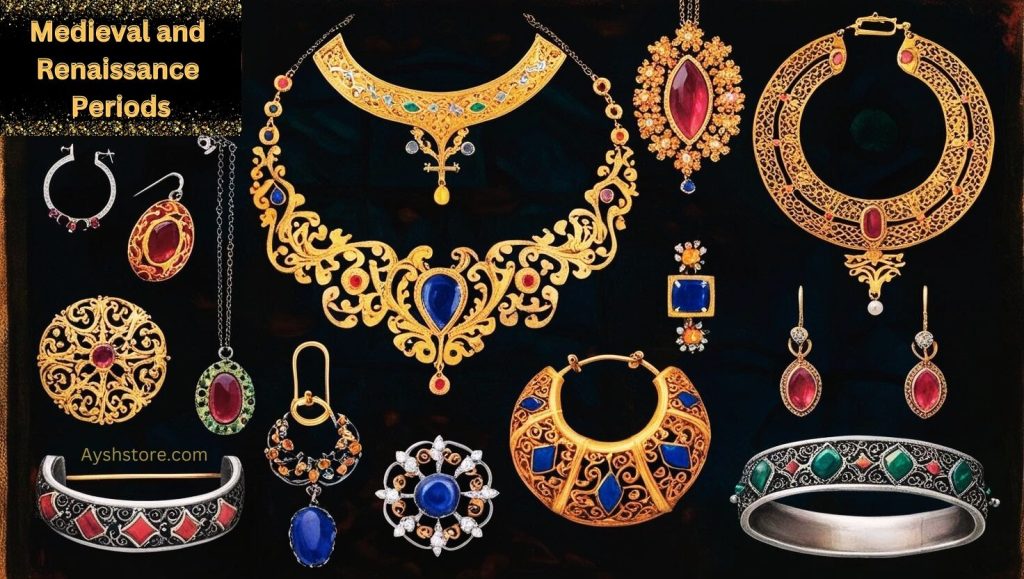
During the Medieval period, jewellery became more ornate and symbolic. Religious motifs dominated the designs, and pieces often featured crosses, saints, and biblical scenes. The Renaissance brought a revival of classical art and culture, leading to more elaborate and artistic jewellery. Techniques such as enamelling and gemstone cutting reached new heights, creating dazzling masterpieces.
The Victorian Era
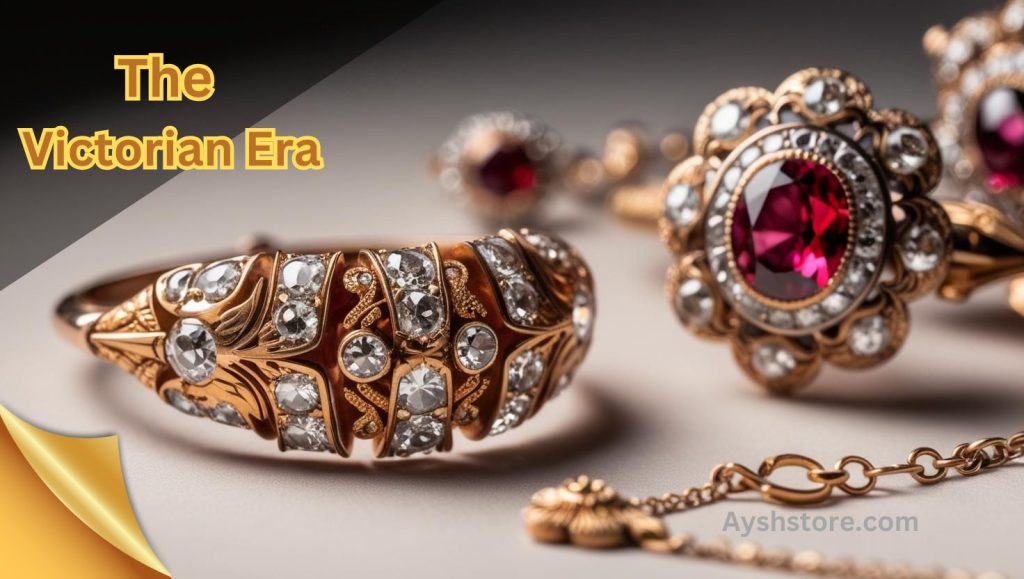
The Victorian era witnessed a significant transformation in jewellery styles, influenced by Queen Victoria’s personal tastes and life events. Sentimental jewellery became popular, with pieces such as lockets, mourning rings, and brooches often containing hair or portraits of loved ones. the discovery of diamond mines in South Africa in this era additionally caused the upward push of diamond earrings.
Modern Era
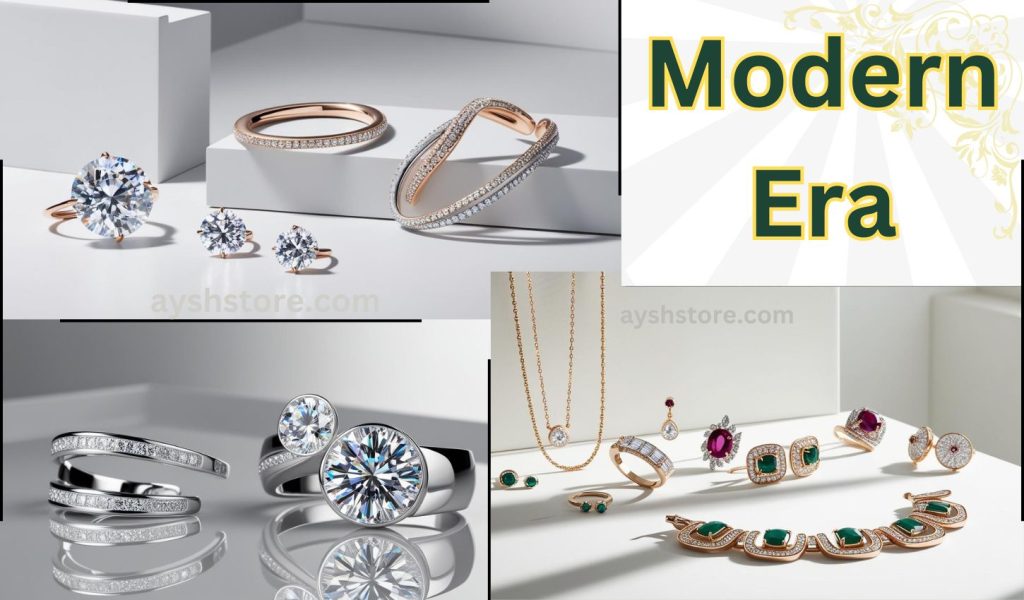
The 20th century marked a period of innovation and diversity in jewellery design. Art Nouveau and Art Deco movements introduced bold, geometric designs and new materials like platinum and Bakelite. The post-war era saw the rise of costume jewellery, making stylish adornments accessible to the masses. Contemporary jewellery continues to push the boundaries of design, incorporating unconventional materials and embracing individuality.
Conclusion
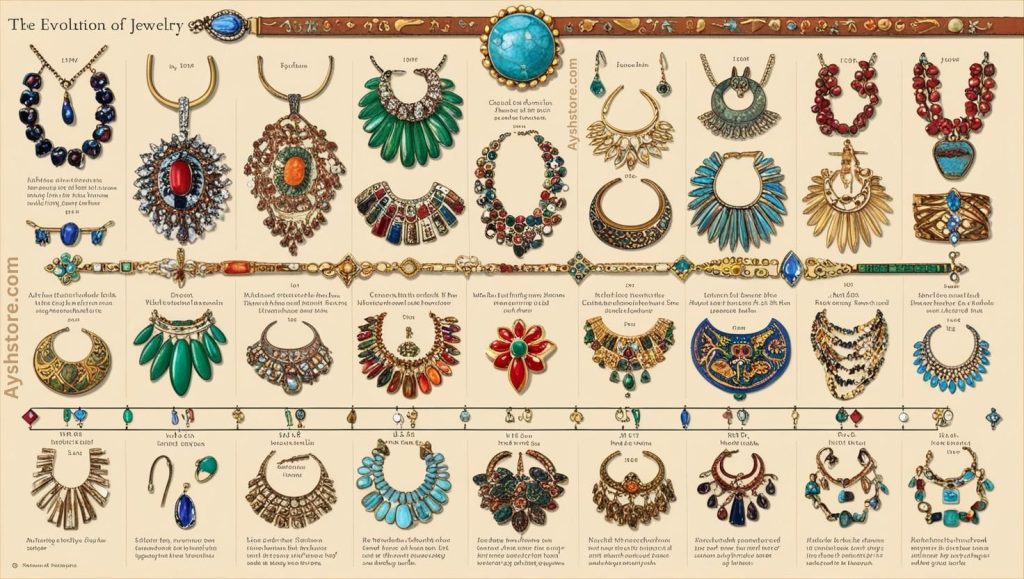
The history and evolution of jewellery is a testament to human creativity and the desire to adorn oneself. From ancient amulets to modern masterpieces, jewellery has continually evolved, reflecting the cultural, technological, and artistic advancements of each era. Today, jewellery remains a cherished form of expression, symbolizing personal milestones, cultural heritage, and artistic innovation. Jewellery’s enduring allure lies in its ability to tell stories, evoke emotions, and connect us to our past, present, and future. Whether a simple band or a complex piece of art, each item of jewellery carries with it a rich history and a unique story waiting to be told.